Joonbeel Mela: Where Barter, Brotherhood and Tradition Still Thrive
Nestled amidst the tranquil wetlands of Morigaon district, about 75 km east of Guwahati, lies one of Assam’s most extraordinary living traditions—the
Joonbeel Mela. More than just a fair, it is a centuries-old celebration of
community, culture and commerce, where age-old customs continue to flourish in an increasingly modern world.
Held every year on the first weekend after the Magh Bihu celebrations in the
month of January, Joonbeel Mela is widely regarded as India’s, in fact the
world’s, last surviving traditional barter fair. Here, money takes a back seat
as people from the hills and the plains gather to exchange their produce through the ancient practice of barter—a tradition that has endured for generations.
The name Joonbeel literally translates to “Moon Lake” inspired by the
crescent-shaped wetland that forms the heart of this unique cultural landscape. Against this picturesque backdrop, communities come together not merely to trade goods, but to renew friendships, strengthen social bonds and celebrate their shared heritage.
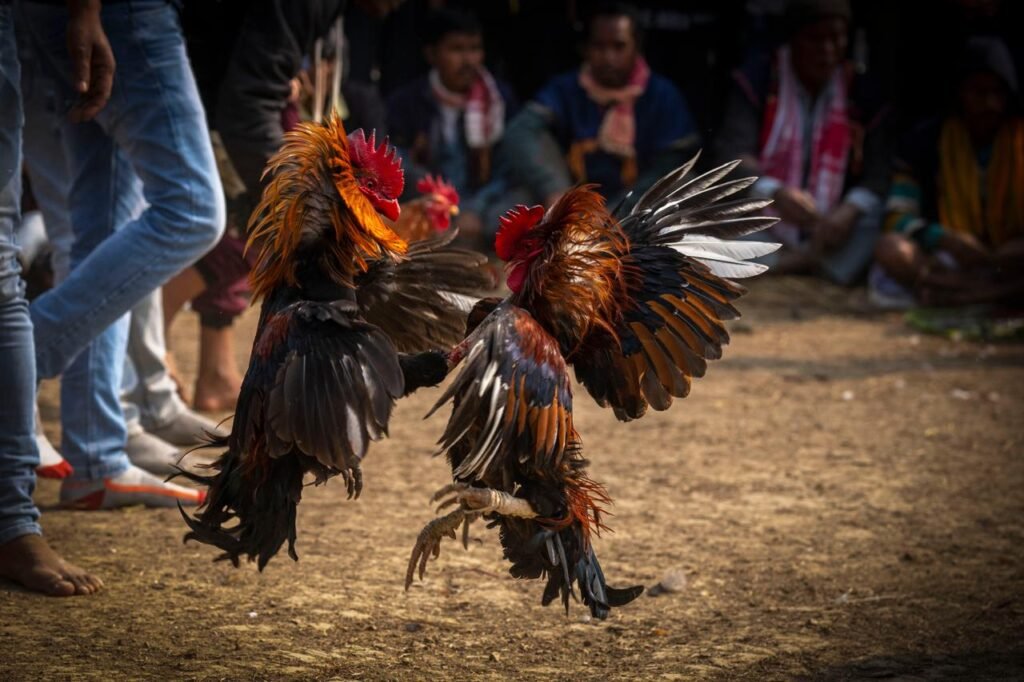
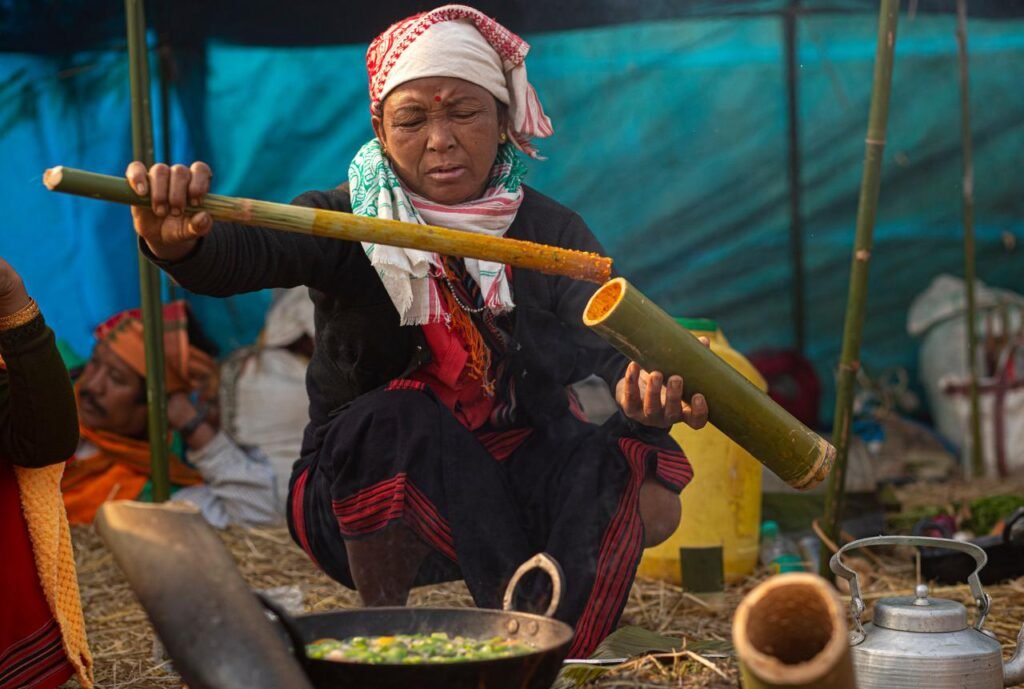
Beyond trade, Joonbeel Mela is a vibrant cultural festival. Traditional music,
folk dances, indigenous cuisine, handicrafts and local festivities fill the
fairgrounds with colour and life, offering visitors an authentic glimpse into
Assam’s rich cultural mosaic. It is a rare opportunity to witness traditions that
have remained remarkably unchanged despite the passage of time.
What makes Joonbeel Mela truly exceptional is that it is not a recreation of
history—it is history in motion. It is a living testament to peaceful coexistence,
sustainable commerce and the enduring bonds between the hill tribes and the
plains communities of Assam.
For travellers seeking experiences beyond conventional tourism, Joonbeel Mela
offers something profoundly meaningful: the chance to witness a tradition
where trust is still a currency, community is the greatest wealth, and centuries-
old customs continue to thrive in the heart of Assam.
One of the most fascinating aspects of the mela is its association with the Tiwa Kingdom. Before the barter market officially begins, the Gobha Raja (Tiwa King) holds a ceremonial royal court known as the Raj Darbar. Village chiefs and representatives from the surrounding Tiwa communities gather to pay their traditional respects and present symbolic tributes to the king, preserving a remarkable institution that has survived through centuries. This colourful ceremony reflects the enduring cultural identity and governance traditions of the Tiwa people.
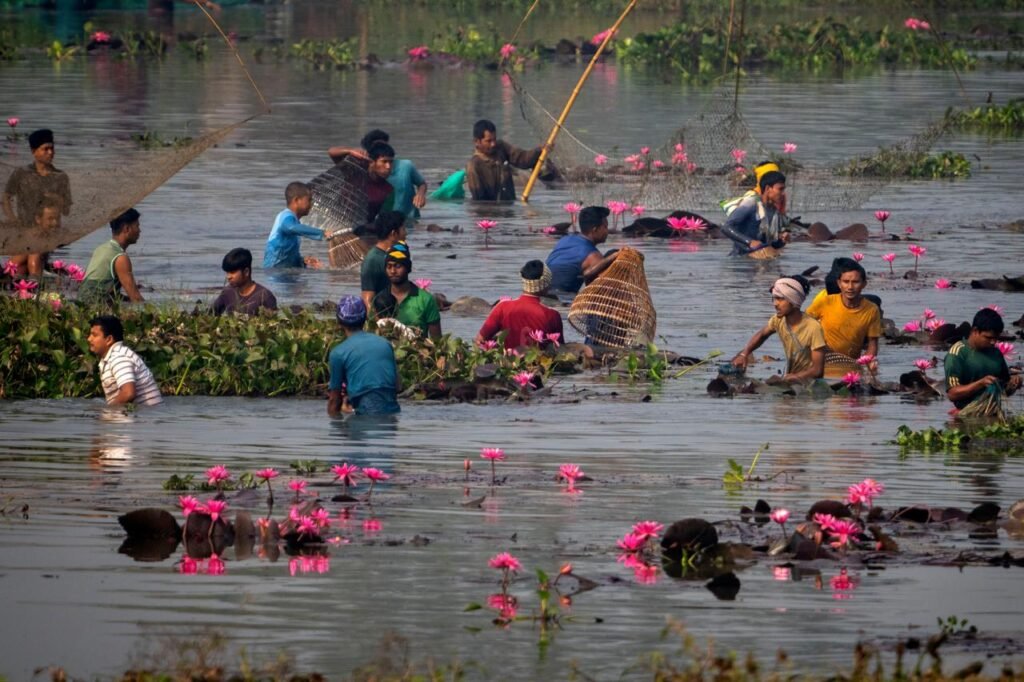
The festivities begin even before the market opens with a spectacular
community fishing event in the waters of Joonbeel. At dawn, hundreds of
villagers enter the lake with traditional bamboo traps and fishing nets, creating a vibrant and unforgettable spectacle. This collective fishing ritual marks the ceremonial beginning of the mela and celebrates the harmonious relationship between the local communities and their natural environment.
The barter market itself is a fascinating display of mutual dependence and trust. Tribal communities from the neighbouring hills—including the Tiwa, Karbi and Khasi people—bring forest produce such as turmeric, ginger, medicinal herbs, spices, fruits and bamboo products. Farmers from the plains arrive with rice, mustard, fish, vegetables and other agricultural produce. Without the exchange of currency, these goods are traded through mutual agreement, preserving an
economic practice that predates the use of money.